East of England · England
Cambridge
Research at international standard without living in a megacity, and London is still under an hour away.
Proposed by UKIZ · independent · not a government designation
Can you get in?
Capability access in Cambridge
Facilities, entry routes and the conditions attached to them. Where Cambridge does not hold a capability, the national route is named instead.
- Laboratory space in Cambridge
Can a small team get fitted lab space in Cambridge, and on what terms?
Available here
Capability the evidence places among organisations and facilities in this field.
Discovery research
Access to university research groups, core facilities and translational institutes
Cambridge Biomedical Campus institutes and University of Cambridge / University of Oxford departments, Cambridge and Oxford
How you get in: Collaboration, sponsored research or spin-out route via the university technology transfer offices
Source: Cambridge Biomedical Campus · verified 2026-08-19
Design & research
Device and circuit design capability plus academic research anchors
University research groups (Cambridge, Southampton Zepler Institute, Bristol, Glasgow), Cambridge, Southampton, Bristol, Glasgow
How you get in: Collaboration, consultancy or facility booking
Source: Zepler Institute, University of Southampton · verified 2026-08-19
Wet lab space for a small team
Fitted category 2 laboratory space available on commercial terms
Multiple operators across the Oxford-Cambridge arc and Alderley Park, Cambridge, Oxford, Alderley Park
How you get in: Direct lease or incubator membership
Conditions: Availability improved materially through 2024-25; water resource and electricity grid connection, not lab supply, are now the binding local constraints
Source: UKIZ operating-location evidence review · verified 2026-08-19
Clinical and human-factors evaluation
The NIHR Cambridge Clinical Research Facility is a 24/7 inpatient unit with a Metabolic Research Area containing measurement technologies for energy balance and body composition allied to metabolic magnetic resonance spectroscopy in the Wolfson Brain Imaging Centre.
NIHR Cambridge Clinical Research Facility, Cambridge Biomedical Campus
How you get in: Study feasibility enquiry with the facility
Conditions: Requires an adopted study with regulatory approvals and a named sponsor
Source: NIHR Cambridge Clinical Research Facility · verified 2026-08-19
Access evidence last verified 2026-08-19.
The place
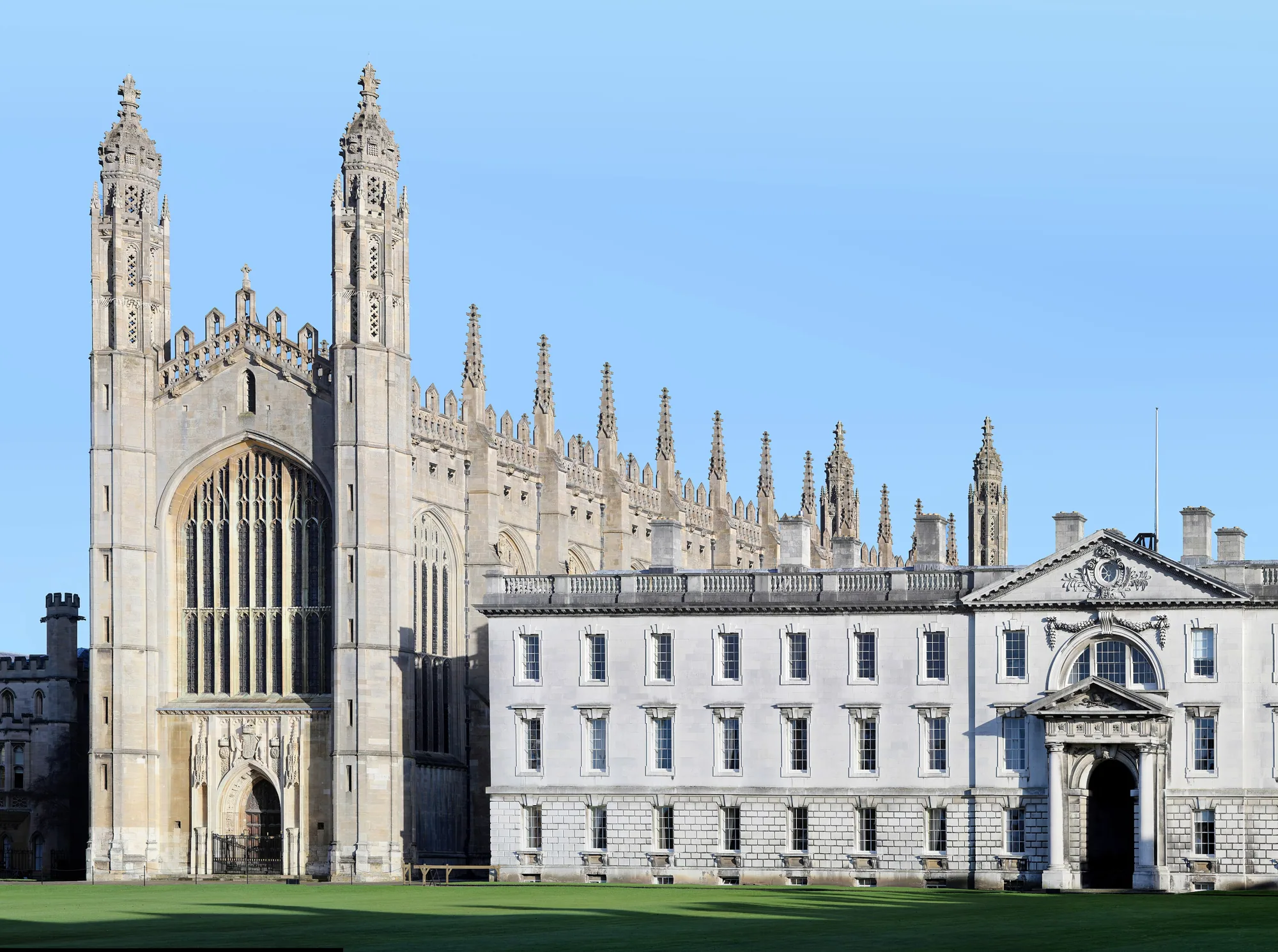
Cambridge is small. You can cross it on a bicycle in twenty minutes, and in that twenty minutes you pass a university that has been doing this for eight centuries, the processor IP that sits inside most of the world's phones, a genomics campus of international standing, and a set of science parks that exist because people kept starting companies instead of leaving.
Nothing about it is a megacity. That is the point. The density here is intellectual rather than physical: the person who can answer your question is usually a short walk away, and quite often at the same table.
- A city you cycle rather than commute across
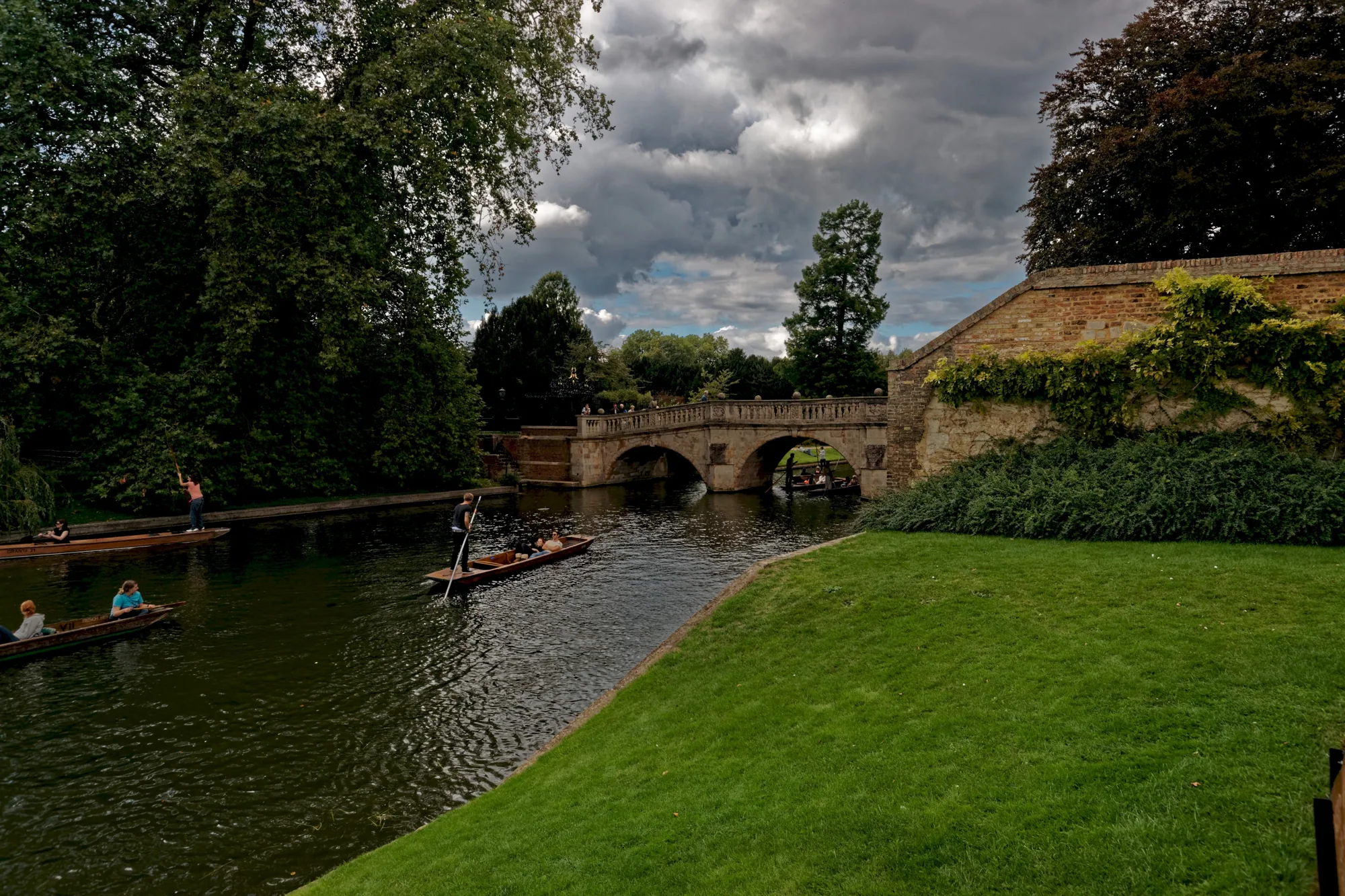
- Colleges, commons and river on one side; science parks on the other
- Conversation at a level that assumes you are serious
- Flat fen countryside, big skies, and London an hour south
- International by default: the research base has always been
Why Cambridge?
Research at international standard without living in a megacity.
- One of the highest concentrations of research activity per head anywhere in Europe, in a city of well under 200,000 people.
- Life sciences, semiconductor IP, AI and engineering biology within a few miles of one another, with a spin-out culture that is decades old rather than newly encouraged.
- A specialist investor base that understands ten-year development timelines, because it has funded them before.
- A compact, cyclable, historic city where the commute is a bike ride along a river.
- Direct rail to London in under an hour, and Stansted for Europe.
- Countryside, colleges and an intellectual community that does not switch off at six.
It is not a big city and does not pretend to be. If you want anonymity, scale and a club at 3am, Cambridge will frustrate you.
What's happening here
Britain is building, and a lot of it is here.
Each item below is a real programme, institution or development with a named source. UKIZ does not publish claims it cannot point at.
Genomics and biomedical research at campus scale
The Wellcome Sanger Institute and EMBL-EBI sit together on the Wellcome Genome Campus south of the city.
Wellcome Genome Campus ↗Processor IP designed here runs worldwide
Arm, headquartered in Cambridge, licenses processor architectures used across the global electronics industry.
Arm ↗A hospital and research campus in one place
The Cambridge Biomedical Campus brings Addenbrooke's Hospital, university research and industry R&D onto a single site.
Cambridge Biomedical Campus ↗The original science park model
Cambridge Science Park, established by Trinity College, remains one of the longest-running technology parks in Europe.
Cambridge Science Park ↗
What this place is good at
Strengths, from the canonical record.
- Life sciences and genomics research
- Semiconductor and processor IP
- Engineering biology
- Deep tech spin-outs from university research
- Life Sciences
- Semiconductors
- Engineering Biology
- Artificial Intelligence
- Quantum Technologies
- Advanced Materials
- AgriTech & FoodTech
- Digital Technologies
DSIT cluster data records Cambridge among the highest R&D intensity locations per head in the UK.