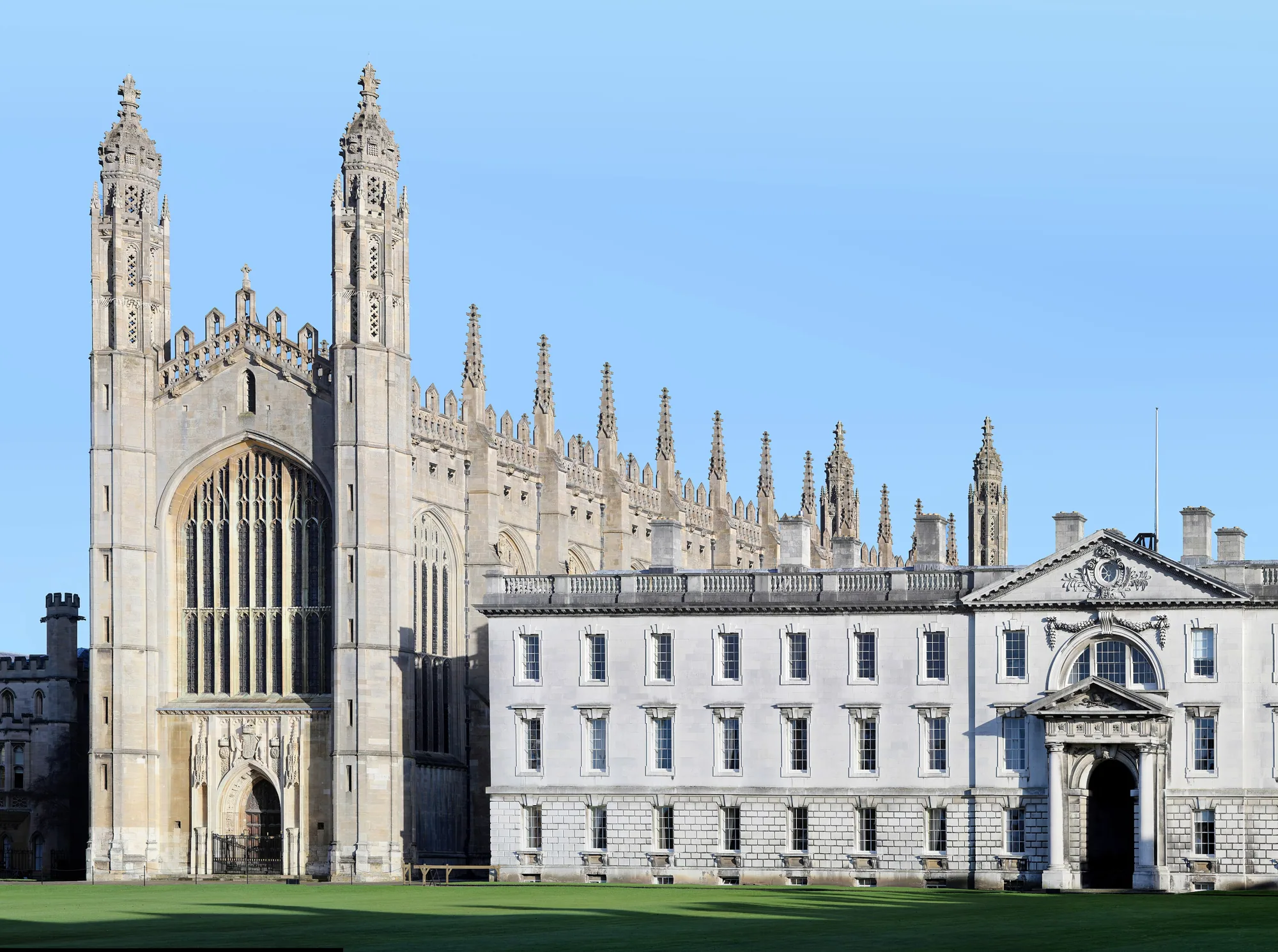
Existing cluster · East of England
Cambridge Innovation Cluster
Cambridge is one of the most research-intensive locations in Europe relative to its size. Semiconductor IP, life sciences, AI and engineering biology sit within a few miles of each other, supported by a mature spin-out culture and a specialist investor base that understands long development timelines.
What is Cambridge good at?
- Life sciences and genomics research
- Semiconductor and processor IP
- Engineering biology
- Deep tech spin-outs from university research
UKIZ analysis
What exists
Drawn from public sources
Extreme research density for its size: life sciences and genomics, semiconductor and processor IP, engineering biology and AI, with a mature spin-out culture and specialist investors who understand long timelines.
What's missing
UKIZ interpretation · proposal
Ownership retention. Discovery and early company formation work; the Series B onward stage frequently transfers ownership overseas. Laboratory and scale-up space, power and housing also constrain growth.
What could connect
UKIZ interpretation · proposal
Cambridge discovery connected to UK manufacturing and biomanufacturing capacity, and to later-stage domestic capital, so that value created here is realised here rather than acquired out of the country.
The cluster
Universities
University of CambridgeUniversities
Research university with a long-established spin-out and technology transfer culture.
Research institutions
Wellcome Sanger InstituteResearch institutes
Genomic research institute working at population and pathogen scale.
MRC Laboratory of Molecular BiologyResearch institutes
Molecular biology research laboratory funded through the Medical Research Council.
Companies, start-ups & scale-ups
Cambridge semiconductor and processor IP clusterCompanies
Concentration of processor architecture, chip design and semiconductor IP businesses.
Specialist infrastructure
Babraham Research CampusSpecialist facilities
Bioscience campus combining institute research with early-stage company laboratory space.
Cambridge Science ParkSpecialist facilities
Long-established science park hosting research-led companies.
Connectivity & data
Connectivity
Direct rail to London in under an hour; Stansted airport nearby.
Relevant data
DSIT cluster data records Cambridge among the highest R&D intensity locations per head in the UK.
Capital, infrastructure & government support
Capital
Specialist deep tech and life science funds, university-linked funds, and corporate partners; strong at seed, thinner at growth stage relative to demand.
Infrastructure
University and institute laboratories, genomics and biomedical campus facilities, and semiconductor design capability.
Government support
Life sciences and advanced technology feature in national priority frameworks; local growth constraints are power, water and space rather than designation.
What could connect elsewhere in Britain
UKIZ interpretation. Places whose capability relates to Cambridge, and why connecting them could create more value than either can create alone.
- Oxford
Cambridge and Oxford both hold Life Sciences and Artificial Intelligence as a leading strength. Two places strong in the same field is complementary capability, not duplication: the connection worth making is a division of labour between discovery, production and demand.
Compare Cambridge and Oxford → - London
Cambridge and London both hold Artificial Intelligence as a leading strength. Two places strong in the same field is complementary capability, not duplication: the connection worth making is a division of labour between discovery, production and demand.
Compare Cambridge and London → - Manchester
Cambridge and Manchester both hold Life Sciences as a leading strength. Two places strong in the same field is complementary capability, not duplication: the connection worth making is a division of labour between discovery, production and demand.
Compare Cambridge and Manchester → - Edinburgh
Cambridge and Edinburgh both hold Artificial Intelligence as a leading strength. Two places strong in the same field is complementary capability, not duplication: the connection worth making is a division of labour between discovery, production and demand.
Compare Cambridge and Edinburgh →
UKIZ perspective
What this could mean for UKIZ.
Cambridge produces intellectual property at a rate few places match, and loses ownership of too much of it at Series B. The proposed Oxford-Cambridge zone concentrates on commercialisation and retention rather than on more discovery.
Proposed national missions this cluster contributes to
- Robotics & Autonomous Systems →
- Life Sciences & Health Innovation →
- Engineering Biology & Biomanufacturing →
- Quantum Technologies →
- Semiconductors, Photonics & Advanced Connectivity →
- Advanced Materials →
- Advanced Manufacturing & Future Mobility →
- Space & Satellite Technologies →
- Clean Energy & Industrial Decarbonisation →
- Defence, Security & Dual-Use Technology →
- Agritech & Future Food →
Proposed by UKIZ · independent · not a government designation
Related clusters
Sources & evidence
Sources & evidence for Cambridge
- DSIT: UK Innovation Clusters Map
- UKRI: research and innovation infrastructure
- British Business Bank: Small Business Equity Tracker (regional equity)
- ONS: regional and business statistics
Descriptive statements are drawn from these sources. Statements about what is missing and what could connect are UKIZ interpretation and are labelled as such. Inclusion on this map is never sold.
Last verified: 15 August 2026